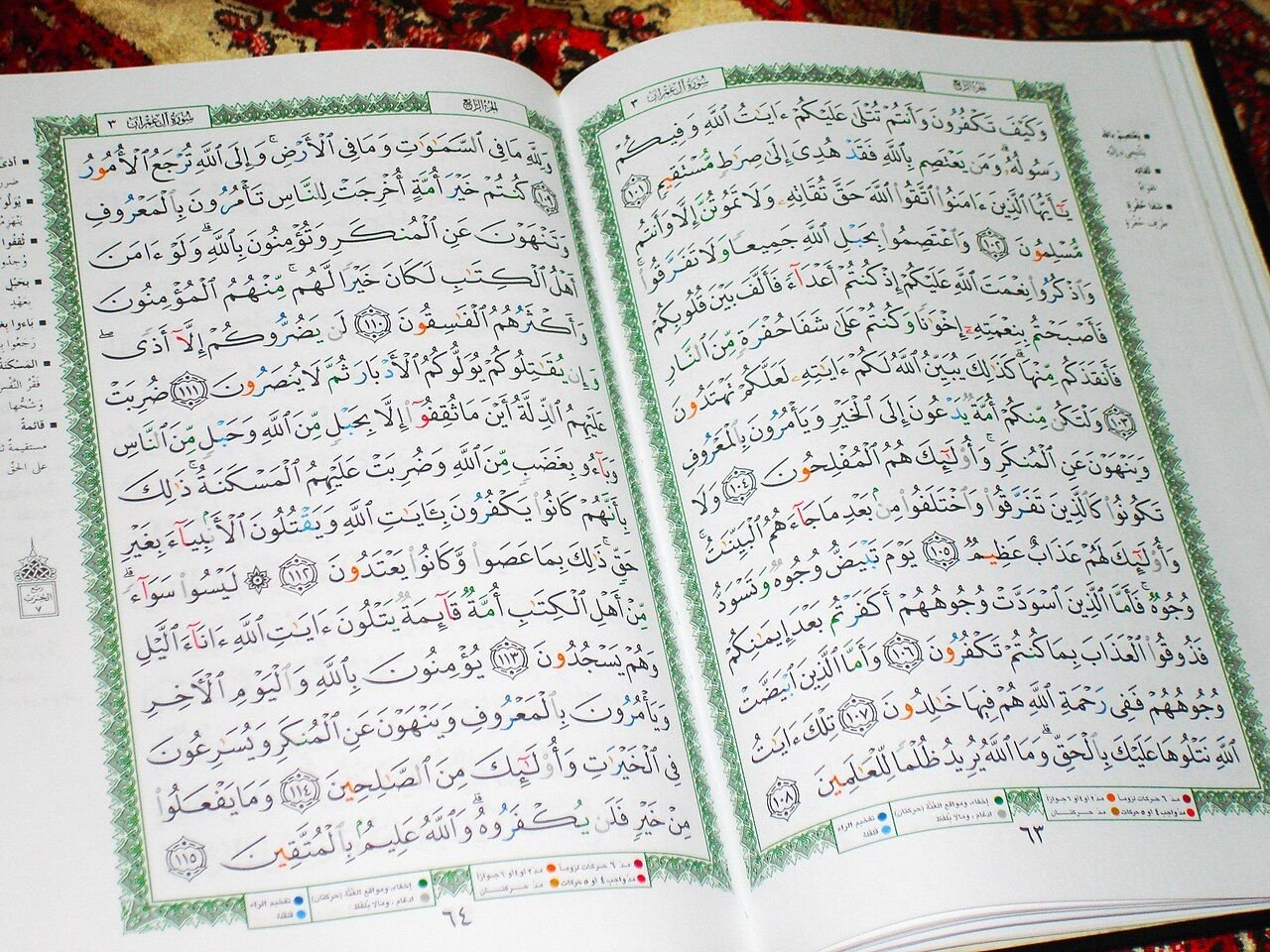
What are the three Quls?
The three Quls are Surah Al-Ikhlas, Surah Al-Falaq and Surah An-Nas, the last three chapters of the Quran. The nickname comes from the first word of each, qul, meaning ‘say’: Allah instructs the Prophet, and through him every believer, to declare His oneness and to seek refuge in Him. Al-Falaq and An-Nas are also called the mu‘awwidhatayn, the name Sahih Muslim uses in its chapter heading on their virtue.
Together they contain fifteen verses. The Quran.com introductions, adapted from Ibn Ashur, describe Al-Ikhlas as Makkan according to the majority and Al-Falaq as Makkan on the stronger view, noting that a report about sorcery led some to consider it Madinan. Because they are short, they are often among the first passages Muslims learn, and they recur throughout the Prophet’s reported daily practice.
How do the three surahs compare?
Each surah has a distinct focus. Al-Ikhlas describes who Allah is; Al-Falaq seeks refuge in Him from harms that come from outside; An-Nas seeks refuge from the whispering that works inside the heart. Reading them in order moves from knowing Allah to relying on Him.
| Surah | Verses | Central theme | Key report |
|---|---|---|---|
| Al-Ikhlas (112) | 4 | Allah’s oneness, self-sufficiency and incomparability | Equal to a third of the Quran (Bukhari 5013) |
| Al-Falaq (113) | 5 | Refuge in the Lord of the Daybreak from created evils, darkness, sorcery and envy | Recited with An-Nas in illness (Bukhari 5016) |
| An-Nas (114) | 6 | Refuge in the Lord, King and God of mankind from the whisperer | Nothing compares for seeking refuge (Abu Dawud 1463) |
What does Surah Al-Ikhlas mean?
Al-Ikhlas declares that Allah is One, that He is as-Samad, that He neither begets nor was begotten, and that none is comparable to Him. Saheeh International renders as-Samad as ‘the Eternal Refuge’. Ibn Kathir reports Ibn Abbas explaining it as the One on whom all creation depends for their needs, and also as the Master perfect in sovereignty, knowledge, wisdom and every attribute of nobility.
Ibn Kathir records that the idolaters asked the Prophet to describe the lineage of his Lord and that the surah was revealed in reply. He explains the last two verses as denying that Allah has any child, parent, spouse or equal. The name Al-Ikhlas, sincerity or purity of faith, reflects that theme, and the Quran.com introduction lists other names, including Surat al-Tawhid.
Why is Al-Ikhlas equal to a third of the Quran?
In Sahih al-Bukhari 5013, a man heard another repeating Al-Ikhlas and told the Prophet about it the next morning, as if he thought it too little. The Prophet swore that it is equal to a third of the Quran. The hadith states the equivalence without explaining how it is measured, and it does not present the surah as a replacement for reading the rest of the Quran.
Love of the surah is also praised. In Sahih al-Bukhari 7375, a commander ended his recitation in prayer with Al-Ikhlas because it describes the Most Merciful and he loved to recite it; the Prophet said, ‘Tell him that Allah loves him.’ Ibn Kathir also cites a report, recorded by al-Bukhari without a connected chain, in which the Prophet told a man that his love of the surah would admit him to Paradise.
What does Surah Al-Falaq mean?
Al-Falaq teaches the believer to say: I seek refuge in the Lord of the Daybreak from the evil of what He created, from the evil of darkness when it is intense, from the evil of sorcery, and from the evil of the envier when he envies. Ibn Kathir reports from Jabir, Ibn Abbas and many early scholars that al-falaq is the morning, so refuge is sought in the Lord who brings the dawn.
For the third verse, Ibn Kathir cites Mujahid, Ibn Abbas and others explaining it as the night when its darkness advances, and records other explanations, including the moon. The fourth verse seeks refuge ‘from the evil of the blowers in knots’ (Saheeh International), which Mujahid and others explained as sorcerers performing their spells.
What does Surah An-Nas mean?
An-Nas seeks refuge in Allah by three descriptions: Lord of mankind, King of mankind and God of mankind. Ibn Kathir explains these as lordship, sovereignty and divinity: all things are created by Him, owned by Him and subservient to Him. Refuge is sought from the evil of the sneaking whisperer who whispers in the hearts of mankind, of the jinn and of mankind.
Ibn Abbas, as cited by Ibn Kathir, described the whisperer as a devil perched on the heart that whispers when a person is heedless and withdraws when Allah is remembered. Ibn Kathir records two views on the final verse: whether it explains whose hearts are whispered into, or who does the whispering, meaning that whisperers exist among both jinn and humans.
When did the Prophet recite the three Quls?
Several reports connect these surahs with daily practice. The table ties each occasion to its source and to the grading displayed on the linked page; Sunnah.com shows no separate grade for the Bukhari reports, which come from a collection compiled as sahih.
One detail deserves precision. The word in Abu Dawud 1523 is the plural mu‘awwidhat; the translation on that page glosses it as the last three surahs, while the translation on the Bukhari 5016 page glosses the same word as Al-Falaq and An-Nas. Reciting all three after prayer covers both readings.
| Occasion | What the report describes | Source and displayed grade |
|---|---|---|
| Before sleep | Recite the three, blow into cupped hands and wipe over the body, beginning with the head, face and front, three times | Sahih al-Bukhari 5017 |
| After each prayer | Uqbah ibn Amir was commanded to recite the mu‘awwidhat after every prayer | Sunan Abi Dawud 1523, sahih (al-Albani) |
| Morning and evening | Al-Ikhlas and the two refuge surahs three times, described as sufficing for everything | Sunan Abi Dawud 5082, hasan (al-Albani) |
| In illness | The Prophet recited the mu‘awwidhat over himself and blew; later Aishah recited them for him | Sahih al-Bukhari 5016 |
| In darkness on a journey | He sought refuge with Al-Falaq and An-Nas during wind and intense darkness | Sunan Abi Dawud 1463, sahih (al-Albani) |
How are Al-Falaq and An-Nas used for ruqyah?
Ruqyah is seeking healing or protection through Quran recitation and supplication. Sahih al-Bukhari 5016 reports that when the Prophet was ill he recited the mu‘awwidhat over himself and blew, and when his illness grew severe Aishah recited them and wiped his own hand over him, hoping for its blessing. Ibn Kathir cites a report, which Tirmidhi called hasan sahih, that after these two surahs were revealed the Prophet used them for protection and left other formulas.
In Sahih Muslim 814a the Prophet described them as newly revealed verses the like of which had never been seen, and in Sunan Abi Dawud 1463 he told Uqbah ibn Amir that no one seeks refuge with anything comparable. These reports encourage recitation with trust in Allah. They do not replace medical treatment or ordinary precautions, and they require no added objects, fees or unsupported rituals.
What are the ‘four Quls’?
Some Muslims speak of four Quls, adding Surah Al-Kafirun (109), which also begins with ‘Say’. The grouping is a popular teaching convention rather than a term used in the reports cited here. Al-Kafirun has its own evidence: Sunan Abi Dawud 5055, graded sahih by al-Albani on the linked page, advises reciting it before sleep as a declaration of freedom from associating partners with Allah.
Sahih Muslim 726 reports that the Prophet recited Al-Kafirun and Al-Ikhlas in the two voluntary rak‘ahs before the dawn prayer. Whether you learn three Quls or four, keep each surah’s own evidence in view rather than transferring the virtues of one surah to another.
Quran passages in this guide
Read each complete verse below in Arabic and the identified English interpretation. Follow the context link before drawing conclusions from an isolated verse.
Al-Ikhlaas 112:1. Al-Ikhlas: Say, He is Allah, the One.
بِسْمِ ٱللَّهِ ٱلرَّحْمَـٰنِ ٱلرَّحِيمِ قُلْ هُوَ ٱللَّهُ أَحَدٌ ١
Say, “He is Allah, [who is] One,
Translation: Saheeh International · Read in context
Al-Ikhlaas 112:2. Al-Ikhlas: as-Samad, the One on whom all depend.
ٱللَّهُ ٱلصَّمَدُ ٢
Allah, the Eternal Refuge.
Translation: Saheeh International · Read in context
Al-Ikhlaas 112:3. Al-Ikhlas: He neither begets nor was begotten.
لَمْ يَلِدْ وَلَمْ يُولَدْ ٣
He neither begets nor is born,
Translation: Saheeh International · Read in context
Al-Ikhlaas 112:4. Al-Ikhlas: none is comparable to Him.
وَلَمْ يَكُن لَّهُۥ كُفُوًا أَحَدٌۢ ٤
Nor is there to Him any equivalent.”
Translation: Saheeh International · Read in context
Al-Falaq 113:1. Al-Falaq: refuge in the Lord of the Daybreak.
بِسْمِ ٱللَّهِ ٱلرَّحْمَـٰنِ ٱلرَّحِيمِ قُلْ أَعُوذُ بِرَبِّ ٱلْفَلَقِ ١
Say, “I seek refuge in the Lord of daybreak
Translation: Saheeh International · Read in context
Al-Falaq 113:2. Al-Falaq: from the evil of what He created.
مِن شَرِّ مَا خَلَقَ ٢
From the evil of that which He created
Translation: Saheeh International · Read in context
Al-Falaq 113:3. Al-Falaq: from the evil of intense darkness.
وَمِن شَرِّ غَاسِقٍ إِذَا وَقَبَ ٣
And from the evil of darkness when it settles
Translation: Saheeh International · Read in context
Al-Falaq 113:4. Al-Falaq: from the evil of sorcery, literally those who blow on knots.
وَمِن شَرِّ ٱلنَّفَّـٰثَـٰتِ فِى ٱلْعُقَدِ ٤
And from the evil of the blowers in knots
Translation: Saheeh International · Read in context
Al-Falaq 113:5. Al-Falaq: from the evil of the envier.
وَمِن شَرِّ حَاسِدٍ إِذَا حَسَدَ ٥
And from the evil of an envier when he envies.”
Translation: Saheeh International · Read in context
An-Naas 114:1. An-Nas: refuge in the Lord of mankind.
بِسْمِ ٱللَّهِ ٱلرَّحْمَـٰنِ ٱلرَّحِيمِ قُلْ أَعُوذُ بِرَبِّ ٱلنَّاسِ ١
Say, “I seek refuge in the Lord of mankind,
Translation: Saheeh International · Read in context
An-Naas 114:2. An-Nas: the King of mankind.
مَلِكِ ٱلنَّاسِ ٢
The Sovereign of mankind.
Translation: Saheeh International · Read in context
An-Naas 114:3. An-Nas: the God of mankind.
إِلَـٰهِ ٱلنَّاسِ ٣
The God of mankind,
Translation: Saheeh International · Read in context
An-Naas 114:4. An-Nas: from the evil of the sneaking whisperer.
مِن شَرِّ ٱلْوَسْوَاسِ ٱلْخَنَّاسِ ٤
From the evil of the retreating whisperer -
Translation: Saheeh International · Read in context
An-Naas 114:5. An-Nas: who whispers in the hearts of mankind.
ٱلَّذِى يُوَسْوِسُ فِى صُدُورِ ٱلنَّاسِ ٥
Who whispers [evil] into the breasts of mankind -
Translation: Saheeh International · Read in context
An-Naas 114:6. An-Nas: of the jinn and of mankind.
مِنَ ٱلْجِنَّةِ وَٱلنَّاسِ ٦
From among the jinn and mankind.”
Translation: Saheeh International · Read in context
Al-Kaafiroon 109:1. The opening of Al-Kafirun, often grouped as a fourth Qul.
بِسْمِ ٱللَّهِ ٱلرَّحْمَـٰنِ ٱلرَّحِيمِ قُلْ يَـٰٓأَيُّهَا ٱلْكَـٰفِرُونَ ١
Say, “O disbelievers,
Translation: Saheeh International · Read in context
Questions readers often ask
What are the mu‘awwidhatayn?
The mu‘awwidhatayn are Surah Al-Falaq and Surah An-Nas, the two surahs of seeking refuge; both open with ‘Say: I seek refuge’. Some reports use the plural mu‘awwidhat, which translators sometimes extend to include Al-Ikhlas.
Should the three Quls be read after every prayer?
Sunan Abi Dawud 1523, graded sahih by al-Albani on the linked page, reports that Uqbah ibn Amir was commanded to recite the mu‘awwidhat after every prayer. The page’s translation glosses the term as the last three surahs; others read it as Al-Falaq and An-Nas only.
How many times should I recite them in the morning and evening?
Sunan Abi Dawud 5082, graded hasan by al-Albani on the linked page, instructs reciting Al-Ikhlas and the two refuge surahs three times in the evening and in the morning, and says they will suffice for every purpose.
How do I blow and wipe with the three Quls before sleep?
Sahih al-Bukhari 5017 describes the Prophet cupping his hands, blowing into them with the recitation of the three surahs, then wiping over as much of his body as he could, beginning with his head, face and the front of his body, and doing this three times.
Does reciting Al-Ikhlas three times equal reading the whole Quran?
Sahih al-Bukhari 5013 says Al-Ikhlas is equal to a third of the Quran, and people often multiply that by three. The hadith itself does not make that calculation or describe the surah as replacing the rest of the Quran, so treat numerical conclusions with caution.
Can I recite the three Quls for someone who is ill?
Sahih al-Bukhari 5016 reports that Aishah recited the mu‘awwidhat for the Prophet during his illness and wiped his hand over his body, hoping for its blessing. Reciting for someone who is ill is therefore reported practice; combine it with supplication and appropriate medical care.
Sources
-
Quran 112: Surah Al-Ikhlas Primary text
Chapter page for Al-Ikhlas; this guide renders its four verses in Arabic and the Saheeh International English translation from the site’s verified local corpus.
-
Quran 113: Surah Al-Falaq Primary text
Chapter page for Al-Falaq; its five verses are rendered from the verified local corpus.
-
Quran 114: Surah An-Nas Primary text
Chapter page for An-Nas; its six verses are rendered from the verified local corpus.
-
Quran 109: Surah Al-Kafirun Primary text
Chapter page for Al-Kafirun, which also opens with ‘Say’.
-
Surah Info: Al-Ikhlas Introduction
Introduction adapted from Tafsir Ibn Ashur: Makkan according to the majority, over twenty names including Surat al-Tawhid, and equal to a third of the Quran.
-
Surah Info: Al-Falaq Introduction
Introduction adapted from Tafsir Ibn Ashur: Makkan on the stronger view, with some arguing for Madinah because of a report about sorcery.
-
Tafsir Ibn Kathir (abridged) on Surah Al-Ikhlas Tafsir
Occasion of revelation, Ibn Abbas on as-Samad, denial of child, parent, spouse or equal, and reports on loving the surah.
-
Tafsir Ibn Kathir (abridged) on Surah Al-Falaq Tafsir
Virtues of the two refuge surahs, al-falaq as the morning, views on the darkness of verse 3, and the blowers on knots as sorcerers.
-
Tafsir Ibn Kathir (abridged) on Surah An-Nas Tafsir
Lordship, sovereignty and divinity; the whisperer who withdraws when Allah is remembered; two views on the final verse.
-
Sahih al-Bukhari 5013 Hadith
Al-Ikhlas is equal to one-third of the Quran.
-
Sahih al-Bukhari 5016 Hadith
The Prophet recited the mu‘awwidhat over himself in illness; Aishah later recited them and wiped his hand over him.
-
Sahih al-Bukhari 5017 Hadith
Bedtime recitation of the three surahs into cupped hands and wiping over the body, three times.
-
Sahih al-Bukhari 7375 Hadith
The commander who loved to recite Al-Ikhlas because it describes the Most Merciful: ‘Tell him that Allah loves him.’
-
Sahih Muslim 814a Hadith
Verses sent down the like of which had never been seen: Al-Falaq and An-Nas; chapter on the virtue of reciting the mu‘awwidhatayn.
-
Sunan Abi Dawud 1463 Hadith
Seeking refuge with Al-Falaq and An-Nas in wind and darkness; no one seeks refuge with anything like them; displayed grade sahih (al-Albani).
-
Sunan Abi Dawud 1523 Hadith
Command to recite the mu‘awwidhat after every prayer; displayed grade sahih (al-Albani).
-
Sunan Abi Dawud 5082 Hadith
Al-Ikhlas and the two refuge surahs three times morning and evening; displayed grade hasan (al-Albani).
-
Sunan Abi Dawud 5055 Hadith
Reciting Al-Kafirun before sleep as a declaration of freedom from polytheism; displayed grade sahih (al-Albani).
-
Sahih Muslim 726 Hadith
Al-Kafirun and Al-Ikhlas recited in the two voluntary rak‘ahs of the dawn prayer.
Qur’an Arabic: Tanzil (CC BY 3.0). English: Saheeh International (via Tanzil).
Pass it on
If this guide helped you, share it with someone it could help too.