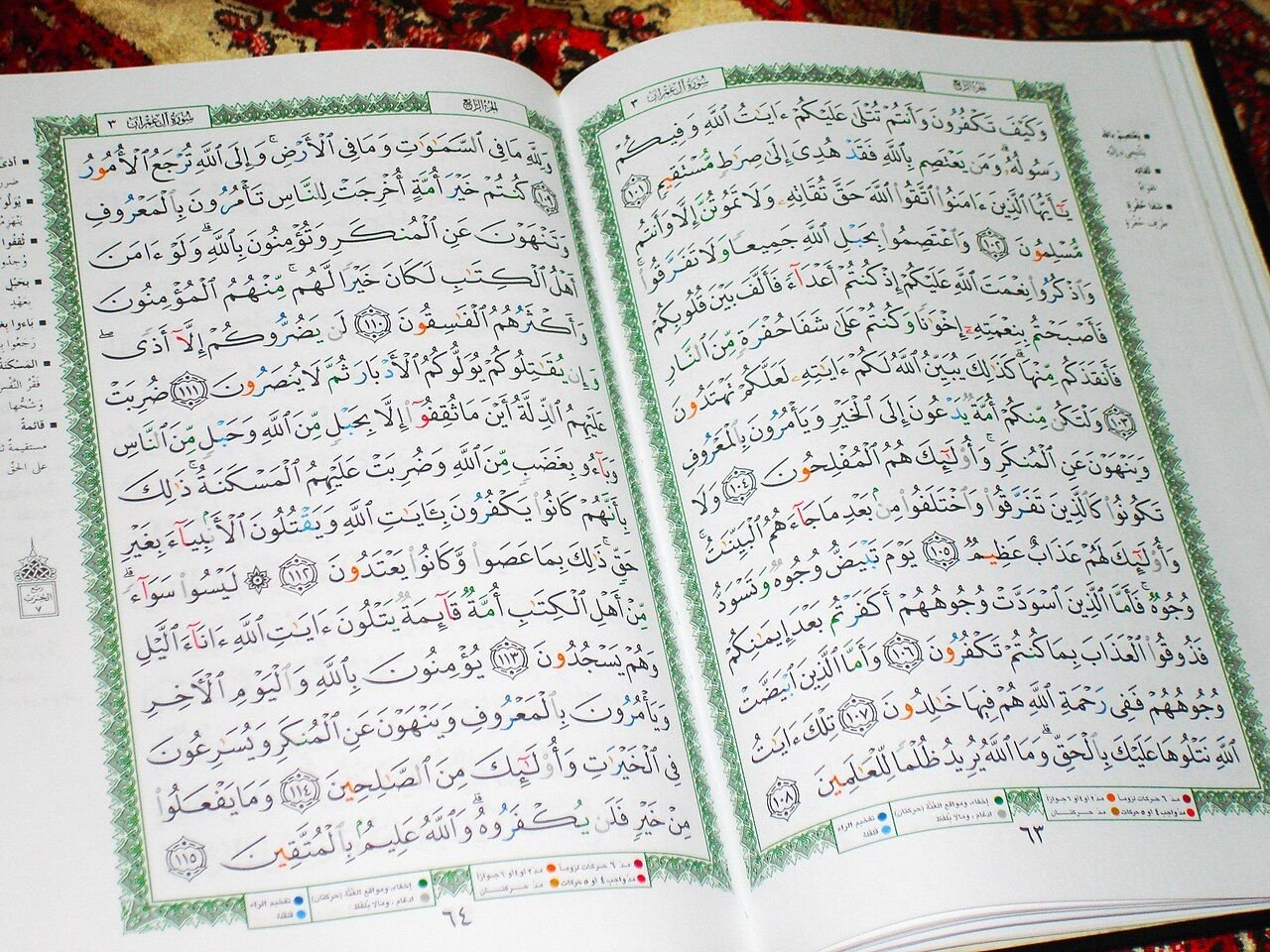
What is Surah Al-Fatihah?
Surah Al-Fatihah, the Opening, is the first chapter of the Quran and has seven verses. Ibn Kathir, in the abridged tafsir on quran.com, calls it the opener of the Book with which prayers are begun, and reports from Ibn Abbas, Qatadah and Abu al-Aliyah that it was revealed in Makkah.
It is recited in every unit of prayer. Sahih al-Bukhari 756 records the Prophet saying that whoever does not recite Al-Fatihah in their prayer has no valid prayer, and Sahih Muslim 395a calls a prayer without Umm al-Quran deficient, repeating the word three times. The schools differ over the follower behind an imam, as explained below.
What are the names of Surah Al-Fatihah?
Al-Fatihah has several names, each drawn from a report or from what the surah does. Ibn Kathir lists names including Umm al-Kitab, al-Hamd, as-Salah, ash-Shifa and ar-Ruqyah, and quotes al-Bukhari: it is called the Mother of the Book because the Quran begins with it and prayer begins with its recitation.
Qur’an 15:87, rendered below, speaks of seven oft-repeated verses given to the Prophet, and Sahih al-Bukhari 4704, placed under that verse, identifies them with Umm al-Quran.
| Name | Meaning | Where it comes from |
|---|---|---|
| Al-Fatihah, Fatihat al-Kitab | The Opening of the Book | Sahih al-Bukhari 756 and Ibn Kathir’s introduction |
| Umm al-Kitab, Umm al-Quran | The Mother of the Book, the Mother of the Quran | Jami at-Tirmidhi 3124, graded sahih on the page |
| As-Sab’ al-Mathani | The seven oft-repeated verses | Qur’an 15:87; Sahih al-Bukhari 4474 and 4704 |
| Al-Quran al-Azim | The Great Quran | Sahih al-Bukhari 4474 and 4704 |
| As-Salah | The prayer | The hadith qudsi in Sahih Muslim 395a |
| Al-Hamd | Praise | Its opening words, as Ibn Kathir notes |
| Ar-Ruqyah, ash-Shifa | A recitation for healing, the cure | Sahih al-Bukhari 5007; listed by Ibn Kathir |
What does Surah Al-Fatihah mean, verse by verse?
Al-Fatihah moves from praise of Allah to a direct request for guidance. Ibn Kathir summarises it as praise through Allah’s beautiful names and attributes, a reminder of the Hereafter, sincere worship of Allah alone and a request for the straight path. The notes below paraphrase each verse.
On the last verse, Ibn Kathir describes those who earn anger as people who know the truth yet turn from it, and those astray as people who have lost true knowledge. He cites Jami at-Tirmidhi 2954, graded hasan on the page, applying these descriptions to Jews and Christians, and draws the lesson that the believer’s path joins knowledge of the truth with acting on it.
- 1:1, the basmala: the reciter begins in Allah’s name, invoking two names of mercy; the numbering used here counts it as the first verse.
- 1:2: all praise and thanks belong to Allah, Lord of everything that exists.
- 1:3: the names of mercy return, framing His lordship with mercy.
- 1:4: the reciter turns to the Day of Judgement, when authority belongs to Allah alone.
- 1:5: worship of Allah alone joined to complete reliance on Him.
- 1:6: the first request, for guidance to the straight path and steadfastness on it.
- 1:7: the path of those favoured, whom Ibn Kathir identifies through Qur’an 4:69 as the prophets, the truthful, the martyrs and the righteous, not the paths of anger or straying.
What is the hadith of the prayer divided between Allah and His servant?
It is a hadith qudsi in Sahih Muslim 395a in which Allah says He has divided the prayer between Himself and His servant, and His servant will have what he asks. At the praise of the Lord of the Worlds, Allah says His servant has praised Him; at the names of mercy, that His servant has lauded Him; at the Master of the Day of Judgement, that His servant has glorified Him.
At You alone we worship and You alone we ask for help, Allah says this is between Him and His servant, and at the request for guidance, that this is for His servant, who will have what he asks. Ibn Kathir explains that the surah is called the prayer here because reciting it is a condition of the prayer. Reciting slowly, pausing at the end of each verse, is one practical way to act on the report.
Do you recite Al-Fatihah behind the imam?
It depends on your school. IslamOnline’s comparative answer summarises the positions: Hanafis say the follower recites nothing, citing Qur’an 7:204 on listening to the Quran; Shafi’is require the follower to recite it in silent and audible prayers alike; Malikis recommend it in silent prayers and dislike it in audible ones; and Hanbalis recommend it in silent prayers and in the imam’s pauses.
Shaykh Muhammad Afifi al-Akiti’s Shafi’i answer on SeekersGuidance calls it obligatory in every rak’ah and recommends that the imam pause after Al-Fatihah in audible prayers. The Hanafi answer on SeekersGuidance has the follower stand in attentive silence and say amin quietly. Follow your own school’s method rather than mixing them.
| School | Silent prayers | Audible prayers |
|---|---|---|
| Hanafi | The follower does not recite | The follower does not recite and listens |
| Maliki | Recommended | Disliked |
| Shafi’i | Obligatory in every rak’ah | Obligatory in every rak’ah, ideally in the imam’s pause |
| Hanbali | Recommended | Disliked, except during the imam’s pauses |
Is Bismillah a verse of Al-Fatihah?
Scholars differ. Ibn Kathir reports that al-Shafi’i, Ibn al-Mubarak and others, with one report from Ahmad, held the basmala to be a verse of every surah except the ninth, Al-Fatihah included, while Malik and Abu Hanifa held that it is not a verse of Al-Fatihah or any other surah; another view, also attributed to Ahmad, treats it as a separate verse before each surah.
The practical difference is audibility. Shaykh Jamir Meah explains that Shafi’is, counting it as part of the surah, recite it aloud in audible prayers, while Ibn Kathir reports that Abu Hanifa, al-Thawri and Ahmad did not say it aloud and that Malik held it is recited neither aloud nor silently in the prayer. Ibn Kathir notes that these imams agree the prayer of both groups is correct.
Ibn Kathir reports no disagreement that the surah has seven verses; the majority of the reciters of Kufa counted the basmala as the first, the count this site’s numbering follows.
Why do we say amin after Al-Fatihah?
Amin is a short supplication that, as Ibn Kathir reports from most scholars, means O Allah, answer our invocation, and it is said after the surah’s closing request for guidance. Sahih al-Bukhari 780 records the Prophet telling worshippers to say amin when the imam says it, for whoever’s amin coincides with that of the angels has their past sins forgiven.
How it is said differs. The Hanafi answer on SeekersGuidance has the follower say amin quietly. A Shafi’i answer on IslamQA explains that the imam says it aloud in audible prayers and softly in silent ones, and that al-Nawawi judged the stronger view to be that the follower also says it aloud. Ibn Kathir adds that amin is recommended after Al-Fatihah even outside prayer.
What are the benefits and virtues of Surah Al-Fatihah?
The best-established virtues concern its rank. In Sahih al-Bukhari 4474 the Prophet called it the greatest surah in the Quran, and in Jami at-Tirmidhi 2875, graded sahih on the page, he said nothing like it was revealed in the Torah, the Gospel, the Psalms or the Quran.
Sahih Muslim 806 records an angel announcing two lights given to the Prophet that no earlier prophet received, Al-Fatihah and the closing verses of Al-Baqarah, with a reward for every letter recited from them. Sahih al-Bukhari 5007 tells of a Companion reciting it over a man stung by a scorpion, and the Prophet asking how he knew it was a ruqyah.
These reports establish its rank and its use as a recitation for healing; its first purpose remains attentive recitation in every prayer.
How can beginners learn and recite Al-Fatihah correctly?
Learn it by listening, repeating in short phrases and having a teacher check you. Because it is recited in every rak’ah, accuracy matters; the Tajweed for beginners guide explains the basics of articulation.
If you are new to Islam and cannot yet recite it, Egypt’s Dar al-Ifta advises remembrance of Allah in its place until you are able, and the chapter heading for Sahih Muslim 395 on sunnah.com speaks of reciting whatever else one can manage.
- Listen to a careful reciter while following the Arabic, one verse at a time.
- Repeat each verse in short phrases until you can say it without looking, then join it to the verse before.
- Learn the meaning alongside the words, using the verse notes above.
- Ask a teacher to listen, especially for sounds absent from your first language.
Quran passages in this guide
Read each complete verse below in Arabic and the identified English interpretation. Follow the context link before drawing conclusions from an isolated verse.
Al-Faatiha 1:1. The basmala, counted as the first verse in the numbering used on this site.
بِسْمِ ٱللَّهِ ٱلرَّحْمَـٰنِ ٱلرَّحِيمِ ١
In the name of Allah, the Entirely Merciful, the Especially Merciful.
Translation: Saheeh International · Read in context
Al-Faatiha 1:2. Praise to Allah, Lord of the Worlds; in the hadith qudsi, Allah says His servant has praised Him.
ٱلْحَمْدُ لِلَّهِ رَبِّ ٱلْعَـٰلَمِينَ ٢
[All] praise is [due] to Allah, Lord of the worlds -
Translation: Saheeh International · Read in context
Al-Faatiha 1:3. The two names of mercy; Allah says His servant has lauded Him.
ٱلرَّحْمَـٰنِ ٱلرَّحِيمِ ٣
The Entirely Merciful, the Especially Merciful,
Translation: Saheeh International · Read in context
Al-Faatiha 1:4. The Day of Judgement; Allah says His servant has glorified Him.
مَـٰلِكِ يَوْمِ ٱلدِّينِ ٤
Sovereign of the Day of Recompense.
Translation: Saheeh International · Read in context
Al-Faatiha 1:5. Worship and seeking help from Allah alone, the part described as between Allah and His servant.
إِيَّاكَ نَعْبُدُ وَإِيَّاكَ نَسْتَعِينُ ٥
It is You we worship and You we ask for help.
Translation: Saheeh International · Read in context
Al-Faatiha 1:6. The request for guidance to the straight path.
ٱهْدِنَا ٱلصِّرَٰطَ ٱلْمُسْتَقِيمَ ٦
Guide us to the straight path -
Translation: Saheeh International · Read in context
Al-Faatiha 1:7. The path of those favoured, distinguished from those who earn anger and those who go astray.
صِرَٰطَ ٱلَّذِينَ أَنْعَمْتَ عَلَيْهِمْ غَيْرِ ٱلْمَغْضُوبِ عَلَيْهِمْ وَلَا ٱلضَّآلِّينَ ٧
The path of those upon whom You have bestowed favor, not of those who have evoked [Your] anger or of those who are astray.
Translation: Saheeh International · Read in context
An-Nisaa 4:69. Those on whom Allah has bestowed favour, cited by Ibn Kathir to explain the final verse of Al-Fatihah.
وَمَن يُطِعِ ٱللَّهَ وَٱلرَّسُولَ فَأُو۟لَـٰٓئِكَ مَعَ ٱلَّذِينَ أَنْعَمَ ٱللَّهُ عَلَيْهِم مِّنَ ٱلنَّبِيِّـۧنَ وَٱلصِّدِّيقِينَ وَٱلشُّهَدَآءِ وَٱلصَّـٰلِحِينَ ۚ وَحَسُنَ أُو۟لَـٰٓئِكَ رَفِيقًا ٦٩
And whoever obeys Allah and the Messenger - those will be with the ones upon whom Allah has bestowed favor of the prophets, the steadfast affirmers of truth, the martyrs and the righteous. And excellent are those as companions.
Translation: Saheeh International · Read in context
Al-A’raaf 7:204. Listening when the Quran is recited, cited for the Hanafi view on the follower’s recitation.
وَإِذَا قُرِئَ ٱلْقُرْءَانُ فَٱسْتَمِعُوا۟ لَهُۥ وَأَنصِتُوا۟ لَعَلَّكُمْ تُرْحَمُونَ ٢٠٤
So when the Qur’an is recited, then listen to it and pay attention that you may receive mercy.
Translation: Saheeh International · Read in context
Al-Hijr 15:87. The seven oft-repeated verses, a title the Prophet applied to Al-Fatihah.
وَلَقَدْ ءَاتَيْنَـٰكَ سَبْعًا مِّنَ ٱلْمَثَانِى وَٱلْقُرْءَانَ ٱلْعَظِيمَ ٨٧
And We have certainly given you, [O Muhammad], seven of the often repeated [verses] and the great Qur’an.
Translation: Saheeh International · Read in context
Questions readers often ask
How many verses are in Surah Al-Fatihah?
Seven. Ibn Kathir reports no disagreement over the number, although scholars differ over whether the basmala is counted as the first verse, as it is in the numbering used on this site.
Was Al-Fatihah revealed in Makkah or Madinah?
Ibn Kathir reports from Ibn Abbas, Qatadah and Abu al-Aliyah that it was revealed in Makkah, and in the same passage quotes Qur’an 15:87 on the seven oft-repeated verses.
Why is Al-Fatihah called the Mother of the Book?
Al-Bukhari, quoted by Ibn Kathir, said it is called Umm al-Kitab because the Quran begins with it and prayer begins with its recitation; Ibn Jarir added that Arabs call anything that gathers many matters an umm.
Do I have to say Bismillah aloud before Al-Fatihah?
It depends on your school. Shafi’is recite it aloud in audible prayers because they count it as part of the surah, while Ibn Kathir reports that Abu Hanifa, al-Thawri and Ahmad did not say it aloud.
Should I say amin when reciting Al-Fatihah alone?
Yes. Ibn Kathir says amin is recommended after Al-Fatihah even outside prayer, and strongly recommended in prayer, whether praying alone or behind an imam.
Can Al-Fatihah be recited for healing?
Sahih al-Bukhari 5007 reports a Companion reciting it over a man stung by a scorpion and the Prophet asking how he knew it was a ruqyah, and Ibn Kathir lists ar-Ruqyah and ash-Shifa among its names.
Sources
-
Quran 1: Surah Al-Fatihah Primary text
Chapter page for Al-Fatihah’s seven verses; this guide renders the Arabic and Saheeh International translation from the site’s verified local corpus.
-
Tafsir Ibn Kathir (Abridged): Al-Fatihah 1:1 Commentary
Names, Makkan revelation, the seven verses, the reason for Umm al-Kitab, the divided prayer, and the views on the basmala and reciting it aloud.
-
Tafsir Ibn Kathir (Abridged): Al-Fatihah 1:7 Commentary
Those favoured, those who earn anger and those astray, the summary of the surah, and the meaning and practice of amin.
-
Sahih al-Bukhari 756 Primary text
Whoever does not recite Al-Fatihah in his prayer has no valid prayer.
-
Sahih Muslim 395a Primary text
A prayer without Umm al-Quran is deficient; the hadith qudsi of the prayer divided between Allah and His servant; the chapter heading on one who cannot yet recite it.
-
Sahih al-Bukhari 780 Primary text
Say amin when the imam says it; whoever’s amin coincides with the angels’ is forgiven past sins.
-
Sahih al-Bukhari 4474 Primary text
The greatest surah in the Quran, the seven repeatedly recited verses and the Grand Quran.
-
Sahih al-Bukhari 4704 Primary text
Umm al-Quran is the seven oft-repeated verses and the Great Quran, under the chapter on Qur’an 15:87.
-
Jami at-Tirmidhi 3124 Primary text
Al-Hamdulillah is Umm al-Quran, Umm al-Kitab and the seven oft-repeated; graded sahih (Darussalam).
-
Jami at-Tirmidhi 2875 Primary text
Nothing like it revealed in the Torah, Gospel, Psalms or Quran; graded sahih (Darussalam).
-
Sahih Muslim 806 Primary text
Two lights given to the Prophet: Al-Fatihah and the closing verses of Al-Baqarah.
-
Sahih al-Bukhari 5007 Primary text
Al-Fatihah recited over a man stung by a scorpion, with the Prophet’s approval.
-
Jami at-Tirmidhi 2954 Primary text
The report applying the final verse’s descriptions to Jews and Christians; graded hasan (Darussalam).
-
IslamOnline: Reciting Al-Fatihah Behind the Imam in Loud Prayers Comparative reference
Summary of the Hanafi, Shafi’i, Maliki and Hanbali positions on the follower’s recitation.
-
SeekersGuidance: Follower Reciting Behind the Imam Scholarly guidance
Hanafi answer by Waseem Hussain, approved by Shaykh Faraz Rabbani: no recitation behind the imam and a quiet amin.
-
SeekersGuidance: Follower Reciting Al-Fatiha in the Shafi’i School Scholarly guidance
Shaykh Muhammad Afifi al-Akiti on the relied-upon Shafi’i position and the imam’s pause.
-
SeekersGuidance: Can I Recite the Basmalah Quietly When Leading the Prayer? [Shafi’i] Scholarly guidance
Shaykh Jamir Meah: Shafi’is count the basmala as a verse of Al-Fatihah and recite it aloud in audible prayers.
-
IslamQA (Shafi’i): Kitab al-Umm, Imam Shafi’i, and Saying Amin Scholarly guidance
The Shafi’i position on the imam’s audible amin and al-Nawawi’s preference for the follower saying it aloud.
-
Egypt’s Dar al-Ifta: A New Muslim Unable to Recite Al-Fatihah Scholarly guidance
Remembrance of Allah in place of Al-Fatihah until a new Muslim is able to recite it.
Qur’an Arabic: Tanzil (CC BY 3.0). English: Saheeh International (via Tanzil).
Pass it on
If this guide helped you, share it with someone it could help too.