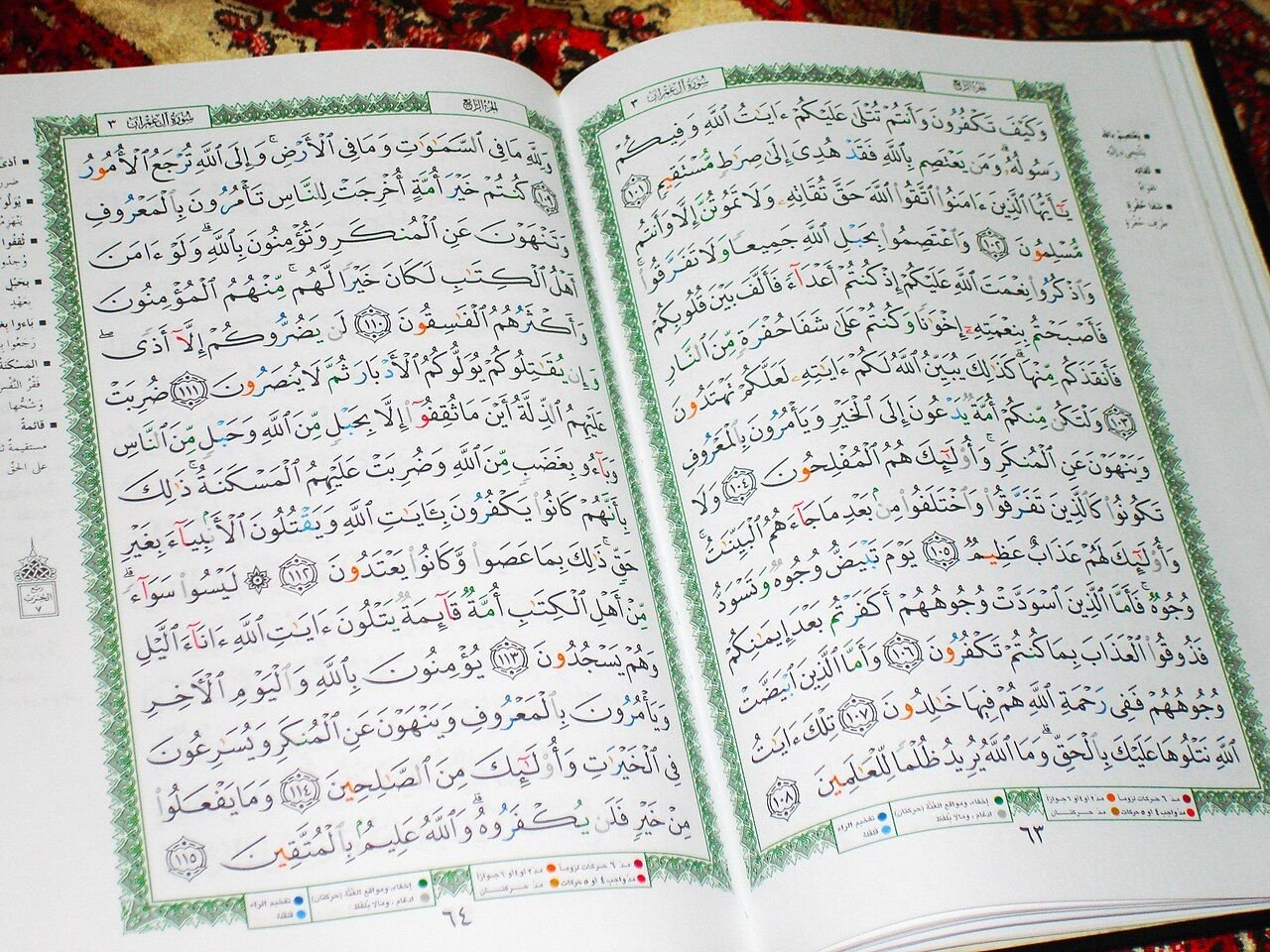
What is Surah Ar-Rahman about?
Surah Ar-Rahman is the Quran’s 55th chapter. It takes its name from its first word, Ar-Rahman, the Most Merciful, and the Quran.com introduction adapted from Ibn Ashur notes that it is the only surah opening with one of Allah’s names. It then says that the Most Merciful made the Quran known, created the human being and taught him speech.
The surah then surveys the sun and moon, the stars and trees, the raised sky and the balance, and the earth with its fruit and grain. It turns to humankind and jinn, the passing away of everything created, judgement, and the rewards of those who fear standing before their Lord. The same introduction reports that most Companions and Followers held it to be Makkan, while some placed it in Madinah.
How is Surah Ar-Rahman structured?
A practical way to follow the surah is in six movements. These boundaries are a study aid rather than revealed headings. The refrain runs through all of them, first at verse 13 and last at verse 77, and each time it returns it asks the listener to name the favour just described.
| Verses | Movement | What to notice |
|---|---|---|
| 55:1–13 | Mercy, revelation, the heavens, the balance and the earth’s provision | Revelation and the measure come before crops and fruit |
| 55:14–25 | Human and jinn origins, two Easts and two Wests, two seas, pearls and ships | Paired creation and dependence on what Allah sustains |
| 55:26–30 | All on earth passes away; the Countenance of your Lord remains | Everything in the heavens and earth asks of Him |
| 55:31–45 | Humankind and jinn challenged, the splitting sky and judgement | The refrain continues even among warnings |
| 55:46–61 | Two gardens for the one who fears standing before his Lord | Is the reward of goodness anything but goodness? |
| 55:62–78 | Two further gardens and the closing blessing of His name | The surah ends by glorifying the name of your Lord |
What does ‘Which of the favours of your Lord will you deny’ mean?
The refrain asks which of Allah’s favours humankind and jinn will deny. Saheeh International renders it ‘So which of the favors of your Lord would you deny?’, and a count of the site’s verified corpus finds it in 31 verses, from 55:13 to 55:77; the Quran.com introduction gives the same total. The Arabic uses the dual form, addressing two parties, and Ibn Kathir, citing Mujahid and others, explains the address as ‘O mankind and jinn’, which matches the dual address of 55:31, rendered by Saheeh International as ‘O prominent beings’.
The favours in view change as the surah moves: the refrain follows crops and fragrant plants, then scenes of fire, then descriptions of reward. Why should the same question follow warnings as well as gardens? One answer consistent with the surah’s opening on mercy is that a warning given in advance is itself a kindness; treat that as a reflection prompt and check a tafsir for detail.
Why does Surah Ar-Rahman speak so often in pairs?
Pairs are one of the surah’s most noticeable patterns. It addresses two groups: humankind, created from clay, and jinn, created from smokeless fire. Allah is Lord of the two Easts and the two Wests, and two seas meet with a barrier between them. The first reward is two gardens with two fountains and fruit in pairs, and beyond them lie two further gardens with two springs.
The text does not explain the pattern itself, so avoid presenting any single theory as settled. A modest reading is that paired descriptions train attention to order and balance. The early command not to exceed the measure but to observe it strictly (55:7–9) gives that balance a moral edge: Ibn Kathir explains the balance as justice and the command as a prohibition on cheating in weights and measures.
What does the surah say about death and judgement?
At its centre the surah turns from abundance to impermanence: everyone on the earth will pass away, and there remains the Countenance of your Lord, of Might and Glory (55:26–27). All in the heavens and earth ask of Him, and every day He exercises power. The favours listed earlier are gifts held for a time, not possessions that last by themselves.
Verses 31–45 address humankind and jinn directly. They are challenged to penetrate the regions of the heavens and the earth, and told they cannot without Allah’s sanction. The sky splits and turns rose-red, the guilty are known by their marks, and the Hell they denied is before them. The refrain continues through these scenes, so warning and mercy are heard side by side.
What are the two gardens and the two further gardens?
Verse 46 promises two gardens to the one who fears the standing before his Lord, with spreading branches, two flowing fountains, every kind of fruit in pairs and couches lined with brocade, followed by the question ‘Is the reward of goodness aught save goodness?’ (55:60). Verse 62 introduces two other gardens, dark green, with two abundant springs, fruit, date-palms and pomegranates.
Translations differ at verse 62. Some render it ‘beside them’, while Saheeh International has ‘below them both [in excellence]’, the reading Ibn Kathir gives: below them in virtue and status. He argues from the differences in description that the first pair is higher, citing a hadith and a statement of Abu Musa that gardens of gold belong to those brought near and gardens of silver to the companions of the right. Readers of Surah Al-Waqiah will recognise those two groups from its opening verses.
How did the jinn respond to the refrain?
Jami` at-Tirmidhi 3291 reports that the Prophet recited Surah Ar-Rahman to his Companions from beginning to end and they remained silent. He told them that he had recited it to the jinn on the Night of the Jinn and that they had responded better: each time he reached the refrain, they said that they denied none of their Lord’s favours, and that to Him belongs praise.
The linked Sunnah.com page displays the grade hasan (Darussalam). Tirmidhi himself called the report gharib, known to him only through al-Walid ibn Muslim from Zuhayr ibn Muhammad, and recorded criticism by Ahmad ibn Hanbal and al-Bukhari of some narrations from Zuhayr. Ibn Kathir cites the report, mentions a similar one through Ibn Umar, and recommends answering as the believing jinn did.
Which benefits of Surah Ar-Rahman are authentic?
Surah Ar-Rahman shares the general merit of reciting the Quran: Jami` at-Tirmidhi 2910, displayed as hasan, describes reward for every letter of Allah’s Book that is recited. Beyond that general virtue and the jinn report above, an IslamQA answer on weak virtue reports says it knows of no proven report about the virtues of Ar-Rahman specifically, and it cites al-Albani grading the saying ‘for everything there is a bride and the bride of the Quran is Ar-Rahman’ as munkar.
Claims that reciting or listening to Ar-Rahman cures illness circulate widely, but they are not established by authentic reports. An answer on Muftisays.com states that the answering mufti has not come across any specific virtue of Ar-Rahman curing disease, and advises treatment alongside Quran recitation and ruqyah. The Quran describes itself generally as ‘a healing and a mercy for believers’ (17:82); recite with hope, but do not promise a medical result or delay care.
How can I read and reflect on Surah Ar-Rahman?
Read Ar-Rahman in the six movements above, or in two sittings divided at verse 45, with the verified Arabic and an identified translation. Before each refrain, pause and name the favour just described. For memorisation, learn the verses between refrains as units and practise the transition from each refrain into the next verse, because the repeated line is easy to misplace.
- Listen once to a careful reciter while following the text.
- Write down three favours from verses 1–25 that you usually take for granted, and one way to show gratitude for each.
- Read 55:26–27 slowly and reflect on what remains when everything else passes away.
- Compare 55:46–61 with 55:62–77 and note which descriptions differ.
- Take questions about responding to the refrain inside prayer to a teacher of your school.
Quran passages in this guide
Read each complete verse below in Arabic and the identified English interpretation. Follow the context link before drawing conclusions from an isolated verse.
Ar-Rahmaan 55:1. The opening verse, naming the Most Merciful.
بِسْمِ ٱللَّهِ ٱلرَّحْمَـٰنِ ٱلرَّحِيمِ ٱلرَّحْمَـٰنُ ١
The Most Merciful
Translation: Saheeh International · Read in context
Ar-Rahmaan 55:2. Revelation presented as the first favour mentioned.
عَلَّمَ ٱلْقُرْءَانَ ٢
Taught the Qur’an,
Translation: Saheeh International · Read in context
Ar-Rahmaan 55:13. The first occurrence of the refrain, repeated in 31 verses.
فَبِأَىِّ ءَالَآءِ رَبِّكُمَا تُكَذِّبَانِ ١٣
So which of the favors of your Lord would you deny?
Translation: Saheeh International · Read in context
Ar-Rahmaan 55:26. Everyone on the earth passes away.
كُلُّ مَنْ عَلَيْهَا فَانٍ ٢٦
Everyone upon the earth will perish,
Translation: Saheeh International · Read in context
Ar-Rahmaan 55:27. The Countenance of your Lord remains.
وَيَبْقَىٰ وَجْهُ رَبِّكَ ذُو ٱلْجَلَـٰلِ وَٱلْإِكْرَامِ ٢٧
And there will remain the Face of your Lord, Owner of Majesty and Honor.
Translation: Saheeh International · Read in context
Ar-Rahmaan 55:46. Two gardens for the one who fears standing before his Lord.
وَلِمَنْ خَافَ مَقَامَ رَبِّهِۦ جَنَّتَانِ ٤٦
But for he who has feared the position of his Lord are two gardens -
Translation: Saheeh International · Read in context
Ar-Rahmaan 55:60. The question on the reward of goodness.
هَلْ جَزَآءُ ٱلْإِحْسَـٰنِ إِلَّا ٱلْإِحْسَـٰنُ ٦٠
Is the reward for good [anything] but good?
Translation: Saheeh International · Read in context
Ar-Rahmaan 55:62. The two further gardens; translations differ on ‘beside’ or ‘below’.
وَمِن دُونِهِمَا جَنَّتَانِ ٦٢
And below them both [in excellence] are two [other] gardens -
Translation: Saheeh International · Read in context
Ar-Rahmaan 55:78. The closing verse blessing the name of your Lord.
تَبَـٰرَكَ ٱسْمُ رَبِّكَ ذِى ٱلْجَلَـٰلِ وَٱلْإِكْرَامِ ٧٨
Blessed is the name of your Lord, Owner of Majesty and Honor.
Translation: Saheeh International · Read in context
Al-Israa 17:82. The Quran described in general terms as a healing and a mercy for believers.
وَنُنَزِّلُ مِنَ ٱلْقُرْءَانِ مَا هُوَ شِفَآءٌ وَرَحْمَةٌ لِّلْمُؤْمِنِينَ ۙ وَلَا يَزِيدُ ٱلظَّـٰلِمِينَ إِلَّا خَسَارًا ٨٢
And We send down of the Qur’an that which is healing and mercy for the believers, but it does not increase the wrongdoers except in loss.
Translation: Saheeh International · Read in context
Questions readers often ask
How many times is ‘Which of the favours of your Lord will you deny’ repeated?
A count of the verified corpus used on this site finds the refrain in 31 verses of Surah Ar-Rahman: 13, 16, 18, 21, 23, 25, 28, 30, 32, 34, 36, 38, 40, 42, 45, 47, 49, 51, 53, 55, 57, 59, 61, 63, 65, 67, 69, 71, 73, 75 and 77. The Quran.com introduction to the surah gives the same total.
How many verses are in Surah Ar-Rahman?
In the Kufan count followed by the site’s corpus, Surah Ar-Rahman has 78 verses. The Quran.com introduction notes that the Madinan and Makkan counting traditions number it at 77, dividing the same text differently.
Does Surah Ar-Rahman cure illness?
No authentic report cited here says that Ar-Rahman specifically cures illness. The Quran as a whole is described as a healing and a mercy for believers, so recitation with supplication is meaningful, but it should accompany medical care rather than replace it.
Is Surah Ar-Rahman the ‘bride of the Quran’?
The title is popular and appears in some introductions to the surah, but the IslamQA answer linked above cites al-Albani grading the underlying saying as munkar, a category of weak report. Describe it as a popular name, not an established hadith.
What should I say when I hear the refrain?
According to Jami` at-Tirmidhi 3291, the jinn answered each refrain by saying that they denied none of their Lord’s favours and that to Him belongs praise. Ibn Kathir recommends answering in the same way. Whether and how to respond during formal prayer is a question for a teacher of your school.
Is Surah Ar-Rahman Makkan or Madinan?
The Quran.com introduction, adapted from Ibn Ashur, says most Companions and Followers regarded it as Makkan, while some said it was revealed in Madinah; its information panel lists Madinah. Ibn Kathir introduces it as revealed in Makkah.
Sources
-
Quran 55: Surah Ar-Rahman Primary text
Chapter page for Surah Ar-Rahman; this guide renders selected verses in Arabic and the Saheeh International English translation from the site’s verified local corpus.
-
Surah Info: Ar-Rahman Introduction
Introduction adapted from Tafsir Ibn Ashur: Makkan according to most Companions and Followers, the only surah opening with a divine name, the refrain repeated 31 times, and 77 or 78 verses by counting tradition.
-
Tafsir Ibn Kathir (abridged) on Quran 55:1–13 Tafsir
Explains the refrain as addressed to mankind and jinn, the balance as justice, cites the jinn report as gharib, and recommends answering as the believing jinn did.
-
Tafsir Ibn Kathir (abridged) on Quran 55:62–78 Tafsir
Reads the two further gardens as lower in status and links the two pairs with those brought near and the companions of the right.
-
Jami` at-Tirmidhi 3291 Hadith
The jinn’s response to the refrain; the page displays hasan (Darussalam), with Tirmidhi’s own description of the report as gharib and his notes on the narrator Zuhayr ibn Muhammad.
-
Jami` at-Tirmidhi 2910 Hadith
General reward for reciting each letter of Allah’s Book; displayed grade hasan (Darussalam).
-
Warning about da‘eef hadiths that speak of the virtues of some soorahs of the Quran Scholarly answer
States that no proven report about the virtues of Ar-Rahman specifically is known and cites al-Albani grading the ‘bride of the Quran’ saying as munkar.
-
Surah Rahman (Muftisays question and answer) Scholarly answer
The answering mufti states he has not come across any specific virtue of Ar-Rahman curing disease and advises treatment alongside Quran recitation and ruqyah.
-
Quran 17:82 Primary text
The Quran described as a healing and a mercy for believers, rendered from the verified corpus.
Qur’an Arabic: Tanzil (CC BY 3.0). English: Saheeh International (via Tanzil).
Pass it on
If this guide helped you, share it with someone it could help too.