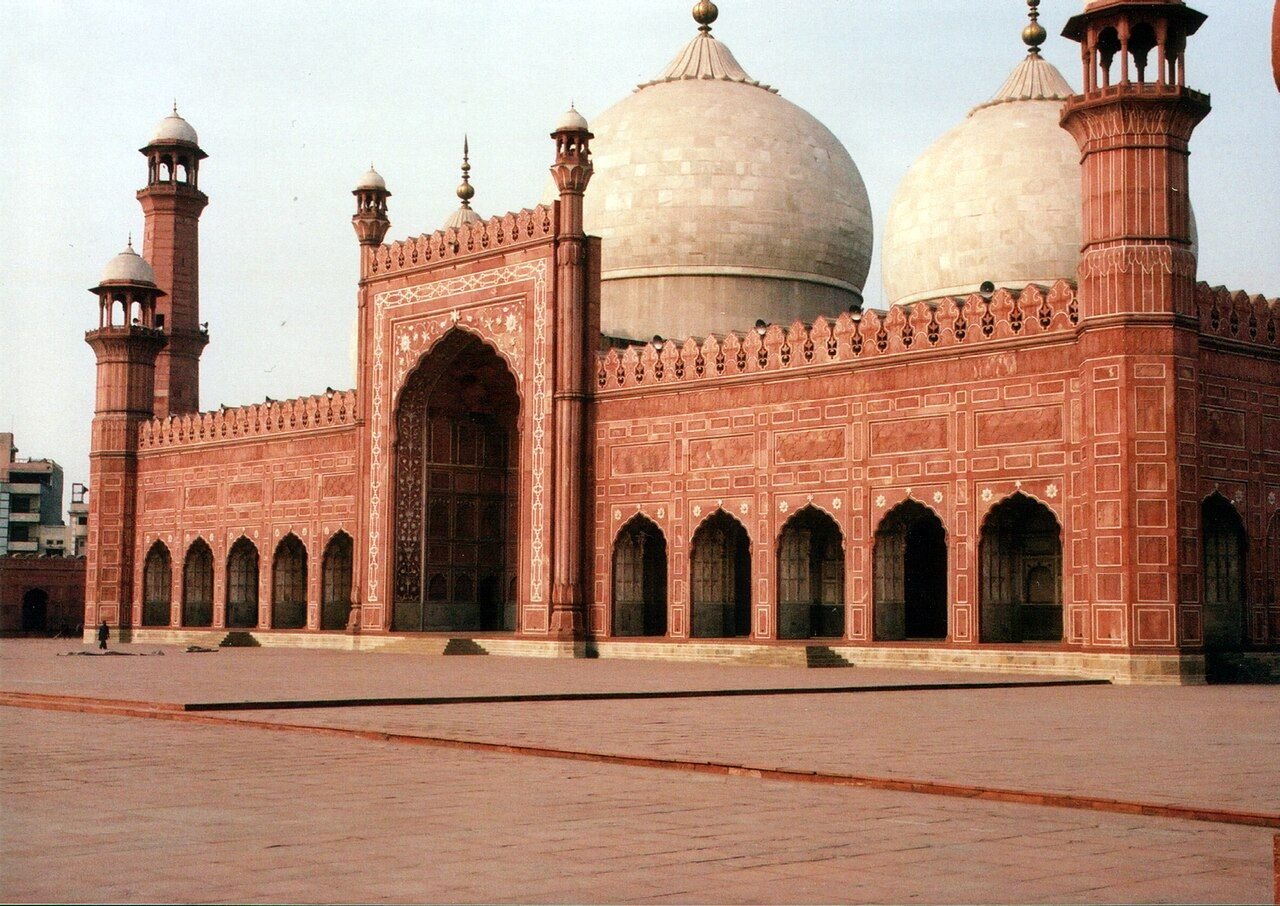
Who is Jesus (Isa) in Islam?
Muslims believe that Jesus, called Isa ibn Maryam in Arabic, is a prophet and messenger of Allah, born of the virgin Maryam and sent to the Children of Israel with a scripture. Quran 3:45 records the angels giving Maryam glad tidings of ‘a word from him, whose name is the Messiah, Jesus, son of Mary’. Sahih al-Bukhari 3435 includes, in a testimony that leads to Paradise, that Jesus is Allah’s servant and messenger, His word bestowed on Mary and a spirit created by Him.
Quran 4:171 calls him Allah’s ‘word which He conveyed unto Mary, and a spirit from Him’. The Quran itself connects his creation with Allah’s word ‘Be!’ when it compares him with Adam (Quran 3:59). Ibn Kathir names Isa among the five messengers of firm resolve, with Nuh, Ibrahim, Musa and Muhammad, noting that Quran 33:7 and 42:13 mention them together.
| Point | Islamic belief | Quran reference |
|---|---|---|
| Name and titles | Isa, son of Maryam, the Messiah, a word from Allah and a spirit from Him | Quran 3:45, 4:171 |
| His mother | Maryam was chosen and purified, and Surah 19 bears her name | Quran 3:42, 19:16-34, 66:12 |
| His birth | Born of a virgin by Allah’s command ‘Be’, as Adam was created | Quran 19:20-22, 3:59 |
| His miracles | Speaking in the cradle, healing and raising the dead, by Allah’s permission | Quran 3:49, 5:110, 19:29-33 |
| His scripture | The Injil (Gospel), guidance and light confirming the Torah | Quran 5:46, 3:48 |
| His message | Worship Allah, my Lord and your Lord | Quran 5:72, 19:36, 43:64 |
| His nature | A human servant and messenger of Allah, not divine | Quran 4:171-172, 5:75, 19:35 |
| The crucifixion | He was not killed or crucified; Allah raised him to Himself | Quran 4:157-158 |
| Good news of a messenger | He announced a messenger after him named Ahmad | Quran 61:6 |
| His return | A sign before the Hour, described in authentic hadith | Quran 43:61, 4:159, as explained by Ibn Kathir |
What does the Quran say about Maryam (Mary)?
The Quran gives Maryam, the mother of Isa, a place of great honour. Quran 3:42 records the angels telling her that Allah had chosen her, made her pure and preferred her above the women of creation, and Surah 19 of the Quran is named Maryam after her. Quran 66:12 holds her up as an example for every believer: chaste, trusting the words of her Lord and His scriptures, and one of the obedient.
Her story is told at length twice. Quran 3:35-47 describes her mother dedicating her to Allah before birth, her upbringing in the care of Zakariyya and the announcement of her son; Quran 19:16-34 describes the angel’s visit, the birth beneath a palm tree and her return to her people. In Sahih al-Bukhari 3411 the Prophet named Maryam, daughter of Imran, and Asiya, the wife of Pharaoh, as women who reached perfection.
Do Muslims believe in the virgin birth of Jesus?
Yes. The Quran states that Maryam conceived Isa without any man touching her. In Quran 19:20 she asks how she can have a son when no mortal has touched her and she has not been unchaste, and the angel replies that it is easy for her Lord, who will make the child a sign for mankind and a mercy (Quran 19:21-22). Quran 3:47 adds that when Allah decrees a thing, He only says to it ‘Be!’ and it is.
The Quran explains the miracle by comparison: ‘the likeness of Jesus with Allah is as the likeness of Adam. He created him of dust, then He said unto him: Be! and he is’ (Quran 3:59). Muslims see the virgin birth as a sign of Allah’s power rather than of divinity. When people accused Maryam, the newborn spoke from the cradle: ‘Lo! I am the slave of Allah’ (Quran 19:30).
What miracles and scripture did Jesus bring according to the Quran?
The Quran describes several miracles of Isa, performed ‘by Allah’s leave’. In Quran 3:49 he tells the Children of Israel that he shapes the likeness of a bird from clay and breathes into it, heals the one born blind and the leper, raises the dead and tells them what they eat and store in their houses. Quran 5:110 recalls these as favours from Allah, adding that he spoke to people in the cradle and was strengthened with the holy Spirit, which Ibn Kathir identifies as the angel Jibril.
Allah also gave him a scripture. Quran 5:46 says Allah gave him the Gospel, the Injil, ‘wherein is guidance and a light, confirming that which was (revealed) before it in the Torah’, and Quran 3:48 says Allah taught him the Scripture, wisdom, the Torah and the Gospel. His disciples declared themselves Allah’s helpers (Quran 3:52, 61:14), and Quran 57:27 says Allah placed compassion and mercy in the hearts of those who followed him.
What did Jesus teach according to the Quran?
In the Quran, the heart of Isa’s message is the worship of Allah alone. Quran 5:72 quotes him saying, ‘O Children of Israel, worship Allah, my Lord and your Lord’, and Quran 19:36 and 43:64 record the same call, describing it as the right path. He describes himself as ‘the slave of Allah’ (Quran 19:30), and Quran 4:172 says the Messiah would never scorn to be a servant of Allah.
For this reason Muslims do not regard Jesus as divine or as the son of God. Quran 19:35 says it does not befit Allah to take a son, and Quran 5:75 says that he and his mother both ate food like other people. In Quran 5:116-117 Allah asks him whether he told people to take him and his mother as gods, and he answers that he said only what he was commanded: worship Allah, my Lord and your Lord. Britannica summarises the Quranic teaching that all prophets are human and never part of divinity.
Isa also brought good news of a later messenger. Quran 61:6 records him confirming the Torah and ‘bringing good tidings of a messenger who cometh after me, whose name is the Praised One’, Ahmad in Arabic, whom Ibn Kathir identifies as the unlettered Arab Prophet from Makkah. In Sahih al-Bukhari 3443 the Prophet Muhammad said he was the nearest of all people to Jesus, son of Mary, because the prophets are brothers whose religion is one.
Do Muslims believe Jesus was crucified?
No. The mainstream Muslim understanding, set out in classical commentaries such as Ibn Kathir’s, is that Jesus was neither killed nor crucified and that Allah raised him to Himself. Quran 4:157 says of those who claimed to have killed him, ‘they slew him not nor crucified him, but it appeared so unto them’, and 4:158 continues, ‘But Allah took him up unto Himself.’ Britannica’s summary of Quranic doctrine likewise says that God saved Jesus from crucifixion.
How it ‘appeared so’ is explained in more than one way. Ibn Kathir relates a report that the likeness of Jesus was cast on a young follower who volunteered, while Jesus was raised to heaven. The commentary Ma’arif al-Qur’an cites that account and another in which the man sent to kill him was made to resemble him, then concludes that the Quran has not fixed which of these happened and that Allah alone knows.
Christians, by contrast, believe that Jesus was crucified, died and rose again, as the Apostles’ Creed states in Britannica’s account. This is one of the clearest differences between the two faiths. The guide explains what Muslims believe and why, without questioning the sincerity of anyone who believes otherwise.
Will Jesus return before the Day of Judgement?
Yes, according to authentic hadith. In Sahih al-Bukhari 3448 the Prophet swore that the son of Mary would soon descend as a just ruler, break the cross, kill the pigs and abolish the jizya, and that wealth would overflow until no one would accept it; Sahih Muslim 155a records the same. Sahih Muslim 2901a lists the descent of Jesus, son of Mary, among ten signs that will come before the Hour.
Muslim commentators also find this in the Quran. On Quran 43:61, which speaks of ‘knowledge of the Hour’, Ibn Kathir says the correct view is that it refers to his descent before the Day of Resurrection, and he connects it with Quran 4:159. Sahih Muslim 2937a describes him descending at a white minaret on the eastern side of Damascus, then catching and killing the Dajjal. Our Day of Judgement guide places these reports among the other signs of the Hour.
How do Islamic and Christian beliefs about Jesus agree and differ?
Muslims and Christians share deep respect for Jesus and Mary, while understanding his nature differently. Both call him the Messiah, affirm his birth from the Virgin Mary, accept that he worked miracles and look for his coming again. Britannica explains that the title Christ comes from the Greek christos, which translates the Hebrew word for Messiah, ‘the anointed one’; the Quran calls him al-Masih, the Messiah (Quran 3:45).
The main differences concern who he is and how his life on earth ended. Britannica notes that most Christians regard Jesus as the Incarnation of God, and the Apostles’ Creed confesses that he was crucified, died, rose on the third day and will come to judge the living and the dead. Muslims believe he is a human prophet and servant of Allah who was not crucified, and that his return is a sign of the Hour. Each faith holds its belief sincerely, and this guide does not judge between them.
The Quran speaks warmly of Christians in several places. Quran 5:82 says the nearest in affection to the believers are those who say ‘We are Christians’, because among them are priests and monks and they are not proud; Ibn Kathir links these verses to a delegation sent to the Prophet by An-Najashi, the king of Ethiopia. Quran 29:46 tells Muslims to discuss faith with the People of the Scripture in the best way, and Quran 3:64 invites them to common ground in worshipping none but Allah.
Quran passages in this guide
Read each complete verse below in Arabic and the identified English interpretation. Follow the context link before drawing conclusions from an isolated verse.
Aal-i-Imraan 3:42. The angels tell Maryam that Allah has chosen and purified her above the women of creation.
وَإِذْ قَالَتِ ٱلْمَلَـٰٓئِكَةُ يَـٰمَرْيَمُ إِنَّ ٱللَّهَ ٱصْطَفَىٰكِ وَطَهَّرَكِ وَٱصْطَفَىٰكِ عَلَىٰ نِسَآءِ ٱلْعَـٰلَمِينَ ٤٢
And [mention] when the angels said, “O Mary, indeed Allah has chosen you and purified you and chosen you above the women of the worlds.
Translation: Saheeh International · Read in context
Aal-i-Imraan 3:45. Glad tidings of a word from Allah named the Messiah, Jesus, son of Mary.
إِذْ قَالَتِ ٱلْمَلَـٰٓئِكَةُ يَـٰمَرْيَمُ إِنَّ ٱللَّهَ يُبَشِّرُكِ بِكَلِمَةٍ مِّنْهُ ٱسْمُهُ ٱلْمَسِيحُ عِيسَى ٱبْنُ مَرْيَمَ وَجِيهًا فِى ٱلدُّنْيَا وَٱلْـَٔاخِرَةِ وَمِنَ ٱلْمُقَرَّبِينَ ٤٥
[And mention] when the angels said, “O Mary, indeed Allah gives you good tidings of a word from Him, whose name will be the Messiah, Jesus, the son of Mary - distinguished in this world and the Hereafter and among those brought near [to Allah].
Translation: Saheeh International · Read in context
Aal-i-Imraan 3:59. The likeness of Jesus with Allah is as the likeness of Adam, created by the word Be.
إِنَّ مَثَلَ عِيسَىٰ عِندَ ٱللَّهِ كَمَثَلِ ءَادَمَ ۖ خَلَقَهُۥ مِن تُرَابٍ ثُمَّ قَالَ لَهُۥ كُن فَيَكُونُ ٥٩
Indeed, the example of Jesus to Allah is like that of Adam. He created Him from dust; then He said to him, “Be,” and he was.
Translation: Saheeh International · Read in context
Maryam 19:30. The infant Isa speaks from the cradle: the servant of Allah, given the Scripture and made a prophet.
قَالَ إِنِّى عَبْدُ ٱللَّهِ ءَاتَىٰنِىَ ٱلْكِتَـٰبَ وَجَعَلَنِى نَبِيًّا ٣٠
[Jesus] said, “Indeed, I am the servant of Allah. He has given me the Scripture and made me a prophet.
Translation: Saheeh International · Read in context
An-Nisaa 4:171. The Messiah as a messenger of Allah, His word conveyed to Mary and a spirit from Him.
يَـٰٓأَهْلَ ٱلْكِتَـٰبِ لَا تَغْلُوا۟ فِى دِينِكُمْ وَلَا تَقُولُوا۟ عَلَى ٱللَّهِ إِلَّا ٱلْحَقَّ ۚ إِنَّمَا ٱلْمَسِيحُ عِيسَى ٱبْنُ مَرْيَمَ رَسُولُ ٱللَّهِ وَكَلِمَتُهُۥٓ أَلْقَىٰهَآ إِلَىٰ مَرْيَمَ وَرُوحٌ مِّنْهُ ۖ فَـَٔامِنُوا۟ بِٱللَّهِ وَرُسُلِهِۦ ۖ وَلَا تَقُولُوا۟ ثَلَـٰثَةٌ ۚ ٱنتَهُوا۟ خَيْرًا لَّكُمْ ۚ إِنَّمَا ٱللَّهُ إِلَـٰهٌ وَٰحِدٌ ۖ سُبْحَـٰنَهُۥٓ أَن يَكُونَ لَهُۥ وَلَدٌ ۘ لَّهُۥ مَا فِى ٱلسَّمَـٰوَٰتِ وَمَا فِى ٱلْأَرْضِ ۗ وَكَفَىٰ بِٱللَّهِ وَكِيلًا ١٧١
O People of the Scripture, do not commit excess in your religion or say about Allah except the truth. The Messiah, Jesus, the son of Mary, was but a messenger of Allah and His word which He directed to Mary and a soul [created at a command] from Him. So believe in Allah and His messengers. And do not say, “Three”; desist - it is better for you. Indeed, Allah is but one God. Exalted is He above having a son. To Him belongs whatever is in the heavens and whatever is on the earth. And sufficient is Allah as Disposer of affairs.
Translation: Saheeh International · Read in context
Al-Maaida 5:116. Isa answers Allah that he never told people to take him and his mother as gods.
وَإِذْ قَالَ ٱللَّهُ يَـٰعِيسَى ٱبْنَ مَرْيَمَ ءَأَنتَ قُلْتَ لِلنَّاسِ ٱتَّخِذُونِى وَأُمِّىَ إِلَـٰهَيْنِ مِن دُونِ ٱللَّهِ ۖ قَالَ سُبْحَـٰنَكَ مَا يَكُونُ لِىٓ أَنْ أَقُولَ مَا لَيْسَ لِى بِحَقٍّ ۚ إِن كُنتُ قُلْتُهُۥ فَقَدْ عَلِمْتَهُۥ ۚ تَعْلَمُ مَا فِى نَفْسِى وَلَآ أَعْلَمُ مَا فِى نَفْسِكَ ۚ إِنَّكَ أَنتَ عَلَّـٰمُ ٱلْغُيُوبِ ١١٦
And [beware the Day] when Allah will say, “O Jesus, Son of Mary, did you say to the people, ‘Take me and my mother as deities besides Allah?’” He will say, “Exalted are You! It was not for me to say that to which I have no right. If I had said it, You would have known it. You know what is within myself, and I do not know what is within Yourself. Indeed, it is You who is Knower of the unseen.
Translation: Saheeh International · Read in context
An-Nisaa 4:157. They did not kill him or crucify him, but it was made to appear so to them.
وَقَوْلِهِمْ إِنَّا قَتَلْنَا ٱلْمَسِيحَ عِيسَى ٱبْنَ مَرْيَمَ رَسُولَ ٱللَّهِ وَمَا قَتَلُوهُ وَمَا صَلَبُوهُ وَلَـٰكِن شُبِّهَ لَهُمْ ۚ وَإِنَّ ٱلَّذِينَ ٱخْتَلَفُوا۟ فِيهِ لَفِى شَكٍّ مِّنْهُ ۚ مَا لَهُم بِهِۦ مِنْ عِلْمٍ إِلَّا ٱتِّبَاعَ ٱلظَّنِّ ۚ وَمَا قَتَلُوهُ يَقِينًۢا ١٥٧
And [for] their saying, “Indeed, we have killed the Messiah, Jesus, the son of Mary, the messenger of Allah.” And they did not kill him, nor did they crucify him; but [another] was made to resemble him to them. And indeed, those who differ over it are in doubt about it. They have no knowledge of it except the following of assumption. And they did not kill him, for certain.
Translation: Saheeh International · Read in context
An-Nisaa 4:158. Allah raised him up to Himself.
بَل رَّفَعَهُ ٱللَّهُ إِلَيْهِ ۚ وَكَانَ ٱللَّهُ عَزِيزًا حَكِيمًا ١٥٨
Rather, Allah raised him to Himself. And ever is Allah Exalted in Might and Wise.
Translation: Saheeh International · Read in context
As-Saff 61:6. Isa confirms the Torah and gives good tidings of a messenger to come after him.
وَإِذْ قَالَ عِيسَى ٱبْنُ مَرْيَمَ يَـٰبَنِىٓ إِسْرَٰٓءِيلَ إِنِّى رَسُولُ ٱللَّهِ إِلَيْكُم مُّصَدِّقًا لِّمَا بَيْنَ يَدَىَّ مِنَ ٱلتَّوْرَىٰةِ وَمُبَشِّرًۢا بِرَسُولٍ يَأْتِى مِنۢ بَعْدِى ٱسْمُهُۥٓ أَحْمَدُ ۖ فَلَمَّا جَآءَهُم بِٱلْبَيِّنَـٰتِ قَالُوا۟ هَـٰذَا سِحْرٌ مُّبِينٌ ٦
And [mention] when Jesus, the son of Mary, said, “O children of Israel, indeed I am the messenger of Allah to you confirming what came before me of the Torah and bringing good tidings of a messenger to come after me, whose name is Ahmad.” But when he came to them with clear evidences, they said, “This is obvious magic.”
Translation: Saheeh International · Read in context
Questions readers often ask
Do Muslims believe in Jesus?
Yes. Belief in Allah’s messengers, Jesus among them, is part of Muslim faith. Quran 2:136 lists what Moses and Jesus received among the things Muslims believe in, making no distinction between the prophets. Muslims believe in him as a prophet and the Messiah, not as divine.
Is Jesus the son of God in Islam?
No. The Quran honours Jesus as the Messiah and a word and spirit from Allah, but describes him as Allah’s servant and messenger. Quran 19:35 says it does not befit Allah to take a son, and Quran 4:171 describes Allah as One, far removed from having a son.
What do the names Isa and al-Masih mean?
Isa is the name the Arabic Quran uses for Jesus, often as Isa ibn Maryam, Jesus son of Mary. Al-Masih means the Messiah, the title given in Quran 3:45; Britannica explains that ‘Christ’ renders the Greek christos, which translates the Hebrew for Messiah, the anointed one.
Who is Ahmad, the messenger Jesus foretold in the Quran?
In Quran 61:6 Jesus gives good tidings of ‘a messenger to come after me, whose name is Ahmad’ (Saheeh International). Ibn Kathir identifies him as the unlettered Arab Prophet and Messenger from Makkah, that is, the Prophet Muhammad.
Why is a surah of the Quran named after Maryam?
Surah 19 takes its name from Maryam, whose story it tells in verses 16 to 34: the angel’s visit, the birth of Isa beneath a palm tree and the infant’s words from the cradle. The surah also mentions Zakariyya, Yahya, Ibrahim, Musa and other prophets.
Sources
-
Quran 3:42-47 Primary text
Maryam chosen and purified; the glad tidings of the Messiah, Jesus son of Mary; how can I have a child; Allah says Be and it is.
-
Quran 3:48-52 Primary text
The Torah and the Gospel taught to Isa, his miracles by Allah’s leave, his call to worship Allah and the disciples as Allah’s helpers.
-
Quran 3:59 Primary text
The likeness of Jesus with Allah is as the likeness of Adam.
-
Quran 3:64 Primary text
An invitation to the People of the Scripture to agree on worshipping none but Allah.
-
Quran 2:136 Primary text
Believing in what Moses and Jesus received, making no distinction between the prophets.
-
Quran 4:157-159 Primary text
They did not kill him or crucify him; Allah took him up to Himself; the People of the Scripture will believe in him before his death.
-
Quran 4:171-172 Primary text
The Messiah as messenger, word and spirit from Allah; Allah is One, far removed from having a son; the Messiah does not scorn to be His servant.
-
Quran 5:46 Primary text
The Gospel given to Jesus, with guidance and light, confirming the Torah.
-
Quran 5:72-75 Primary text
The Messiah’s call to worship Allah, my Lord and your Lord; he and his mother ate food.
-
Quran 5:82 Primary text
Those who say ‘We are Christians’ are nearest in affection to the believers, for among them are priests and monks who are not proud.
-
Quran 5:110 Primary text
Allah’s favours to Isa and his mother: the holy Spirit, speech in the cradle, the Torah and Gospel and miracles by His permission.
-
Quran 5:116-117 Primary text
Isa denies telling people to take him and his mother as gods; he said only what he was commanded.
-
Quran 19:16-36 Primary text
Maryam’s story, the virgin birth, the infant’s speech from the cradle and the statement that it does not befit Allah to take a son.
-
Quran 29:46 Primary text
Discuss with the People of the Scripture only in the best way.
-
Quran 33:7 Primary text
The covenant taken from the prophets, naming Noah, Abraham, Moses and Jesus son of Mary.
-
Quran 42:13 Primary text
The religion commended to Noah, Abraham, Moses and Jesus.
-
Quran 43:63-64 Primary text
Jesus came with clear proofs and wisdom: Allah is my Lord and your Lord, so worship Him.
-
Quran 57:27 Primary text
The Gospel given to Jesus, and compassion and mercy placed in the hearts of his followers.
-
Quran 61:6 Primary text
Jesus confirms the Torah and gives good tidings of a messenger after him; rendered on this page from the verified corpus.
-
Quran 66:12 Primary text
Mary, daughter of Imran, held up as an example: chaste, faithful and obedient.
-
Tafsir Ibn Kathir on Quran 46:35 Commentary
Names the messengers of determination as Nuh, Ibrahim, Musa, Isa and Muhammad, mentioned together in 33:7 and 42:13.
-
Tafsir Ibn Kathir on Quran 2:87 Commentary
Ruh al-Qudus, the holy Spirit that supported Isa, is Jibril, citing Ibn Mas’ud, Ibn Abbas and others.
-
Tafsir Ibn Kathir on Quran 61:6 Commentary
Isa’s good news of the unlettered, Makkan, Arab Prophet and Messenger, Ahmad.
-
Tafsir Ibn Kathir on Quran 4:157-158 Commentary
They did not kill or crucify him; the report that his likeness was cast on a volunteer while he was raised; Allah raised him to Himself.
-
Ma’arif al-Qur’an on Quran 4:157-158 Commentary
Gives two reports of how the resemblance occurred and concludes that the Quran has not determined which, and Allah alone knows.
-
Tafsir Ibn Kathir on Quran 43:61 Commentary
The correct view is that ‘knowledge of the Hour’ refers to the descent of Isa before the Day of Resurrection, with 4:159.
-
Tafsir Ibn Kathir on Quran 5:82-86 Commentary
Reports that these verses concern a delegation sent to the Prophet by An-Najashi, king of Ethiopia.
-
Sahih al-Bukhari 3435 Hadith
Testifying that Jesus is Allah’s servant and messenger, His word bestowed on Mary and a spirit created by Him, is part of a testimony leading to Paradise.
-
Sahih al-Bukhari 3443 Hadith
I am the nearest of all people to Jesus, son of Mary; the prophets are paternal brothers and their religion is one.
-
Sahih al-Bukhari 3411 Hadith
Among women, Asiya, Pharaoh’s wife, and Mary, daughter of Imran, reached perfection.
-
Sahih al-Bukhari 3448 Hadith
The son of Mary will descend as a just ruler, break the cross, kill the pigs and abolish the jizya; chapter on the descent of Isa.
-
Sahih Muslim 155a Hadith
The same report of the descent of the son of Mary as a just judge.
-
Sahih Muslim 2901a Hadith
Ten signs before the Hour, including the descent of Jesus son of Mary.
-
Sahih Muslim 2937a Hadith
Jesus, son of Mary, descends at the white minaret in the east of Damascus and catches and kills the Dajjal at the gate of Ludd.
-
Britannica: Islam, doctrines of the Qur’an Reference
Jesus born of the Virgin Mary and saved by God from crucifixion; all prophets are human and never part of divinity.
-
Britannica: Jesus Reference
Also known as Isa and Isa ibn Maryam; regarded by most Christians as the Incarnation of God; Christ is a title from christos, translating meshiah, the anointed one.
-
Britannica: Jesus, the Apostles’ Creed Reference
The creed’s articles: born of the Virgin Mary; crucified, died and buried; rose on the third day; will come to judge the living and the dead.
Qur’an Arabic: Tanzil (CC BY 3.0). English: Saheeh International (via Tanzil).
Pass it on
If this guide helped you, share it with someone it could help too.